
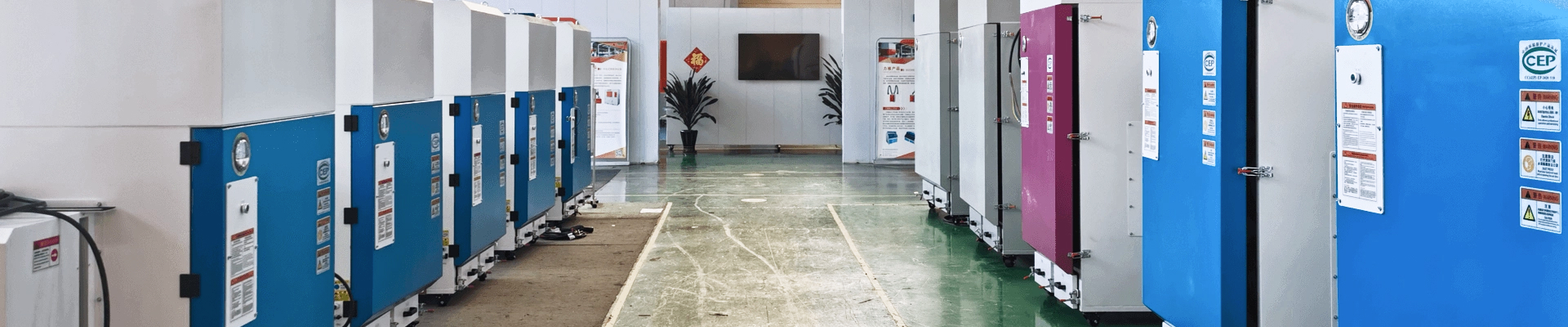
Looking for a high-efficiency fume extraction solution for MIG/MAG welding in dynamic hardware manufacturing?
A professional mobile dust extraction unit acts as an agile, localized defense shield—intercepting toxic micro-particulates, metallic fumes, and dense smoke directly at the welding arc. Built by DRIC, our mobile welding fume extractors feature high-vacuum suction motors 2500-3000m³/h, multi-stage spark-arresting fire nets, and 360° posable external-skeleton arms. Replacing ineffective, low-cost units that fail under load, DRIC provides a heavy-duty fume extraction solution for MIG/MAG welding that moves effortlessly alongside manual welders in automated valve and hardware processing lines.
1. Real-World Case Study: Valve Hardware Processing & Dynamic MIG/MAG Welding
In high-precision hardware manufacturing—such as valve fittings and pipe component production—robotic welding cells handle high-volume automated runs. However, secondary assembly and custom fitting usually require manual MIG/MAG welding operators who move dynamically across different work tables.
The Client's Operational Challenge
Mixed Automation Environment: The factory operates automated robotic welding cells alongside 2 active manual welders. These operators move back and forth between different jigs to perform tacking and seam welds on valve accessories.
Dense Smoke & Mobility Requirements: MIG/MAG welding on industrial valve metal stock produces dense metallic fumes and high-temperature sparks. Because the 2 welders move frequently, fixed overhead hoods proved completely ineffective.
The "Cheap Extractor" Trap: To address the smoke, the client previously purchased low-cost, off-the-shelf mobile extractors. These cheap units failed almost immediately—the motors lacked sufficient static pressure to draw smoke through the flexible arms, internal joints quickly clogged with soot, and unrated paper filters saturated within weeks, leaving heavy haze lingering in the workshop.
The DRIC Solution: A Low-Risk Pilot Trial
DRIC deployed two industrial-grade mobile dust extraction units fitted with external-skeleton suction arms and integrated fire nets. Positioned right at the manual MIG/MAG stations, the units instantly captured fumes at the source, giving the client a proven, scalable path to shop floor air compliance.

2. Technical Parameter Comparison: Low-Cost Units vs. DRIC Engineering
To help sourcing teams avoid performance pitfalls, the comparison below highlights the technical differences between standard budget extractors and DRIC industrial solutions:
| Engineering Parameter | Low-Cost Budget Extractor | DRIC Mobile Extraction Unit |
| Suction & Static Pressure | Drops sharply under load; fails to capture heavy MIG/MAG fumes beyond 10 cm. | High-vacuum static pressure 2500-3000m³/h for reliable capture at30-40cm. |
| Spark Protection | Basic mesh or none; sparks directly strike and burn paper filter elements. | Multi-stage Fire Net & Settle Room; cools and drops heavy sparks before the filter. |
| Suction Arm Construction | Internal friction joints that clog with soot, lose tension, and restrict airflow. | External-Skeleton Arm 360°;keeps mechanical joints outside the dirty airstream. |
| Filter Technology | Cheap cellulose paper; clogs rapidly when exposed to oily hardware weld smoke. | Nanofiber / PTFE-Coated Cartridge; equipped with automated reverse pulse-jet cleaning. |
3. Step-by-Step Pilot Deployment Strategy for Mobile Manual Welding
For factories transition from low-performing equipment, follow this 4-step deployment framework to verify efficiency before full-fleet integration:
1.Identify High-Mobility Manual Welding Zones
Locate the manual MIG/MAG welding stations positioned adjacent to the main robotic welding cells. Measure the typical movement radius of the 2 manual operators working on valve fittings.
2.Position Standalone Trial Units
Deploy two DRIC mobile welding fume extractors directly at the manual stations. Adjust the $3\text{--}4\text{m}$ external-skeleton suction arms directly over the active weld joints.
3.Verify Fume Capture & Spark Knockdown
Operate the units during high-volume MIG/MAG welding shifts. Confirm that the integrated fire net safely intercepts sparks and that heavy blue fume plumes are drawn completely into the hood without escaping into the general room air.
4.Establish Routine Maintenance & Full Fleet Expansion
Utilize the integrated pulse-jet compressed air cleaning system daily and empty the lower ash collection tray bi-weekly. With verified suction stability, roll out identical units across secondary grinding or assembly stations.
4. FAQ: Sourcing Insights for Hardware Manufacturers
Q: Why did the client's previous cheap mobile extractor fail during MIG/MAG welding?
A: Low-cost extractors usually rely on low-pressure axial fans and cheap internal-joint suction arms. MIG/MAG welding generates dense metallic smoke and hot spatter. Cheap internal joints quickly accumulate sticky soot, restricting airflow, while unrated paper filters clog rapidly under high particulate loading, causing suction power to drop to near zero within weeks.
Q: Can a mobile dust extraction unit keep up with manual welders who move between different jigs?
A: Yes. DRIC mobile welding fume extractors are built on heavy-duty swivel casters with integrated brake locks, allowing single operators to roll the cabinet effortlessly between jigs. Paired with $360^\circ$ posable external-skeleton arms, welders can reposition the suction hood with one hand in seconds as they move along complex valve assembly lines.
Q: How does the integrated spark arrestor protect the extractor during heavy MIG/MAG wire welding?
A: MIG/MAG welding produces intense, hot sparks. DRIC units feature a multi-stage protection system starting with a mechanical fire net at the intake, followed by an internal settle room. The fire net physically blocks large embers, while the settle room reduces air velocity, causing heavy sparks to cool and drop safely into the lower collection tray before contacting the nanofiber filter cartridge.
Request Quote
Tell us your inquiry, we will recommend a suitable product model or solution for you!

