
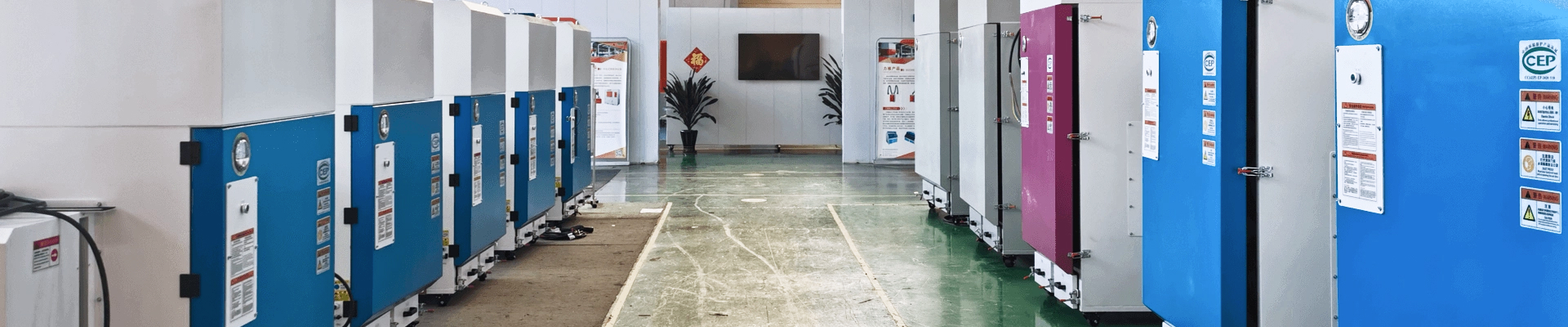
An ESP oil mist collector is a high-efficiency industrial air filtration unit that uses high-voltage electrostatic ionization to charge airborne oil particles and collect them on polarized collector plates. Engineered by DRIC, an ESP oil mist collector achieves over 90% filtration efficiency without replacement media. Operating at approximately 0.2 kWh (0.47-0.53 kW power rating), this oil mist extractor captures droplets down to sub-micron sizes while continuously draining collected oil back to machine tools.
1. Oil Mist Generation, Classification, and Hazards
During high-speed metal cutting, grinding, and CNC machining, cutting fluids are atomized under high thermal and mechanical stress. Understanding mist particle dynamics and chemical composition determines appropriate air purification strategies.
Generation Mechanisms and Droplet Size Distribution
Mechanical Atomization: High-speed rotation of spindles, tools, and coolant nozzles breaks bulk liquid into airborne droplets. Droplet sizes typically range from 2 μm to 10 μm.
Thermal Evaporation & Condensation: Extreme friction at the tool-workpiece interface generates high localized heat, vaporizing oil. As oil vapors cool in ambient workshop air, they condense into ultra-fine sub-micron aerosols (<2 μm).
Chemical Classification of Machine Tool Mists
| Fluid Category | Typical Chemical Components | Physical Form & Hazard Profile |
| Emulsified Coolant Mist | Lubricating oils, emulsifiers, anti-corrosion additives, trace SO2 and preservatives. | Liquid droplets (2-10μm); accelerates workshop floor slickness and equipment corrosion. |
| Neat Cutting Oil Mist | Polychlorinated biphenyl (PCB) mixtures, acrolein, benzene derivatives, polycyclic aromatic hydrocarbons (PAHs). | Fine aerosols (<2 μm); poses respiratory hazards and volatile flammable risks. |
| Textile / Synthetic Oil Smoke | Organic oil compounds, surfactant components, and thermal decomposition byproducts. | Sub-micron vapor condensation; creates persistent indoor haze and electrical cabinet contamination. |
2. Operating Principle of the DRIC ESP Oil Mist Collector
The DRIC electrostatic precipitator (ESP) oil mist extractor utilizes a multi-stage physical and electrical collection mechanism:

Pre-Filtration: Intake air passes through an outer front wave net that traps bulk liquid splash and large airborne debris.
Ionization Stage: Unfiltered aerosols enter the high-voltage ionization zone. An electrostatic field charges airborne mist particles positively or negatively.
Electrostatic Collection: Charged particles pass between parallel positive and negative collector plates. Electrical attraction forces mist particles out of the airstream onto the plates.
Self-Draining Coalescence & Post-Filter: Oil droplets accumulate on the smooth metal plates, coalesce under surface tension, and gravity-drain down into the machine tool reservoir. Clean air passes through a rear post-filter for final discharge into the plant.
3. Technology Comparison: ESP vs. Mechanical Cartridge Oil Mist Collectors
Evaluating an ESP oil mist collector against traditional mechanical media units highlights differences in long-term consumable costs, energy usage, and hazardous waste generation:
| Performance Indicator | DRIC Electrostatic (ESP) Collector | Mechanical (Cartridge) Collector | Technical Impact / Operational Significance |
| Purification Efficiency | >90% | ~ 70% | Higher single-pass capture of sub-micron oil vapors (<2 μm). |
| Power Consumption | 0.47-0.53 kW | 1.5-3.0 kW | ESP units lower fan pressure drop requirements. |
| Filter Consumables | Zero filter media replacement | RMB 500-2,000 per filter | Eliminates recurring media purchase and stocking costs. |
| Maintenance Cycle | Clean every 3–5 months | Replace cartridges every 1–2 months | Metal cell plates are washable and reusable. |
| Waste Disposal Costs | Zero hazardous filter waste | Mandatory hazardous waste disposal fees | Avoids regulated disposal costs for saturated media. |
| Oil Recycling Rate | Direct fluid return (~0.1 L/h) | Trapped inside disposable media | Reclaims clean cutting oil directly back to the machine sump. |
4. Operating Cost Analysis: Minimal Utility Impact
The primary operational cost of a DRIC electrostatic oil mist collector is the electrical power consumed by its high-voltage generator and small air impeller.
Electricity Consumption: With an operating power draw of 0.47-0.53 kW, average hourly energy usage is approximately 0.25 kWh per operational cycle.
Zero Consumable Expenses: Unlike mechanical systems that require new filter elements every 30 to 60 days, ESP cells are constructed from stainless steel/aluminum plates. Periodic cleaning restores cell efficiency without replacement media purchases.
5. Precise Sizing & Selection Criteria
Selecting the correct oil mist extractor capacity requires evaluating machine enclosure variables and processing conditions:
Enclosure Volume (V): Internal cubic meters (m3) of the CNC enclosure dictate the required volumetric airflow (m³/h) to maintain negative static pressure.
Door Opening Frequency: High-frequency automated doors require higher air exchange rates to prevent mist spillover during loading cycles.
Workpiece Material & Heat Load: Heavy stock removal on hard alloys generates higher thermal vapor loads (< 2 μm) requiring higher ESP cell capacity.
High-Pressure Coolant Delivery: High-pressure coolant pumps (> 20 bar) increase mechanical atomization, generating higher droplet concentrations (2-10 μm).
Contact Our Engineering Team: Unsure which ESP oil mist collector sizing matches your specific CNC machine tools and coolant pressures? Contact DRIC application engineers today for a customized airflow calculation and system recommendation.
Applications & Key Product Advantages
Core Application Scenarios
High-Precision Swiss CNC Lathes & Machining Centers: Captures oil mists generated during high-speed turning and milling with neat cutting oils.
Gear Hobbing & Grinding Machinery: Extracts heavy oil smoke caused by continuous tooth contact friction and high-pressure fluid delivery.
Cold Heading & Fastener Forming Presses: Cleans dense thermal vapors produced during high-tonnage wire forming operations.

Distinctive Product Advantages
Substantial Operating Energy Savings: Consumes 0.47-0.53 kW, reducing power consumption compared to high-differential-pressure mechanical units.
Reusable Washable Collector Cell: Made of metal plate assemblies that wash clean in detergent solutions, eliminating media replacement costs.
In-Line Coolant Recovery: Directs up to 0.1 L/h of captured fluid back into machine tool sumps, lowering raw coolant replenishment costs.

FAQ
Q: How does an ESP oil mist collector lower long-term operating costs compared to mechanical filters?
A: An ESP oil mist collector lowers operating costs by using washable collector cells that eliminate replacement filter media expenses. Operating at 0.47-0.53 kW, it consumes approximately 0.25 kWh per hour while recycling captured oil directly to the machine sump.
Q: What is the recommended maintenance schedule for an electrostatic oil mist extractor?
A: The standard maintenance schedule for an electrostatic oil mist extractor requires washing the ionizer and collector plates every 3 to 5 months. Facilities machining low-mist alloys or operating under light production loads can extend this cleaning interval accordingly.
Q: Can an ESP oil mist collector handle both water-soluble emulsions and neat cutting oil mists?
A: Yes, an ESP oil mist collector effectively purifies water-soluble emulsions and neat cutting oil aerosols. High-voltage ionization charges both mechanical liquid droplets (2-10 μm) and fine thermally condensed oil vapors (< 2μm), achieving over 90% filtration efficiency.
Request Quote
Tell us your inquiry, we will recommend a suitable product model or solution for you!

