
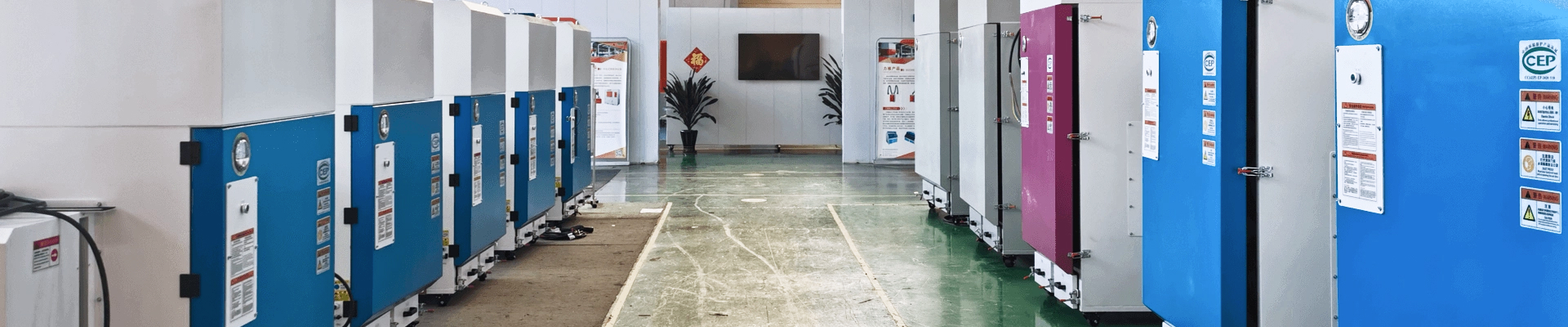
How do ductless fume extraction towers capture industrial welding smoke and purify workshop air without expensive ductwork installations?
An industrial fume extraction tower (also known as a clean air tower, welding airtower, or air purification tower) utilizes ambient recirculating displacement ventilation to capture toxic metal oxides (such as iron, manganese, calcium, and sodium dust) directly at the workshop level. Driven by DRIC technology, these standalone units draw polluted warm air upward through a 360°top-suction inlet array, filtering sub-micron particulates through high-efficiency internal cartridges before discharging purified air back into the facility. Designed as a ductless, highly mobile system, DRIC air purification towers eliminate complex ductwork while delivering intelligent PLC automated scheduling, making them ideal for centralized welding halls, robotic production lines, mixed laser cutting/grinding stations, and aluminum alloy welding environments.
1. System Structural Comparison: Top-Suction vs. Displacement Air Towers
DRIC manufactures two primary structural configurations of clean air towers to match varied industrial ceiling heights, thermal plume dynamics, and shop floor layouts:
| Structural Feature | Top-Suction Displacement Air Tower | Bottom-Suction Air Delivery Tower |
| Air Intake Mechanism | Top-mounted 360° suction louvers capturing rising thermal fumes. | Mid-level suction grilles drawing ambient workshop air. |
| Purified Air Exhaust | Bottom adjustable directional louvers discharging clean air near floor level. | Top-mounted spherical jet nozzles delivering purified air across long distances. |
| Core Structural Components | Top intake, upper purification chamber, mid control/fan section, bottom dust drawer. | Top spherical nozzles, fan acoustic chamber, mid purification section, bottom control box. |
| Internal Safety Features | Labyrinth spark pre-separator, pulse-jet valves, and noise-reduction muffler box. | Integrated pre-treatment baffle system, air tank, and sound-absorbing foam casing. |
| Mobility & Installation | Heavy-duty Foot Master casters for effortless shop floor relocation; zero ductwork. | Heavy-duty Foot Master casters with modular position adjustments; zero ductwork. |
| Primary Industrial Match | Heavy structural welding, robotic welding cells, high-ceiling central halls. | Mixed laser cutting/welding, grinding stations, copper/aluminum alloy processing. |


2. Step-by-Step Working Principle: The Internal Recirculation Process
The DRIC welding airtower operates on a 5-stage continuous air-cleaning cycle that maximizes thermal comfort while reducing facility energy consumption:
1.360° Top-Suction Fume Capture
As welding or cutting generates warm, buoyant smoke, the top-mounted 360° suction louvers draw the rising thermal plume into the tower without leaving capture dead ends.
2.Labyrinth Spark & Heavy Particulate Pre-Separation
Incoming airborne dust passes through an internal labyrinth pre-separator structure, knocking down hot sparks and heavy particles into the lower dust collection box to protect the filter media.
3.Cartridge Surface Filtration & Automated Reverse Pulse Cleaning
Sub-micron metal fumes are captured on the outer surface of high-efficiency PTFE filter cartridges. An automated PLC pulse-jet system fires compressed air to knock trapped dust into the mobile drawer.
4.Acoustic Silencer Attenuation
Purified air passes from the central cartridge core through the internal fan chamber, where sound-absorbing acoustic foam muffles motor noise for quiet operation.
5.Directional Clean Air Displacement
Purified, clean air is gently exhausted back into the worker breathing zone via adjustable bottom louvers or top spherical nozzles, maintaining optimal indoor air quality without heat loss.

(air clean tower working principle)
3. Key Application Scenarios & Engineering Advantages
DRIC fume extraction towers provide versatile, high-capacity air purification across diverse industrial environments:
Centralized Welding Workshops: Perfectly suited for multi-station continuous manual welding, automated robotic welding lines, and large-scale structural steel fabrication where overhead cranes make traditional extraction arms impractical.
Mixed Metalworking Operations: Handles multi-process facilities combining manual arc welding, automated grinding/deburing, and high-speed laser cutting without requiring separate duct systems.
Specialty Alloy Fabrication: Effectively filters toxic, fine metal fumes produced during aluminum alloy welding, copper alloy processing, and stainless steel fabrication.
Ductless Flexibility & Portability: Equipped with industrial Foot Master casters, allowing the unit to be relocated anywhere on the factory floor as production layouts evolve.
Intelligent PLC Control System: Features a central LCD touchscreen, variable frequency drive (VFD), and equipment reservation scheduling to automate daily startup and shutdown cycles.
4. FAQ: Technical & Operational Insights
Q: Why originated the indoor recirculating ventilation system, and why is it superior to ductwork?
A: Originating in Nordic industrial facilities as a way to retain indoor heat during winter, self-recirculating ventilation purified indoor air while eliminating the massive heating energy losses associated with outdoor duct exhaust. Today, around 35% of European industrial ventilation systems utilize this technology because it combines targeted air purification with significant thermal energy savings.
Q: How does a ductless clean air tower handle facilities with overhead crane bridges?
A: Traditional dust extraction systems require fixed overhead ductwork and hanging flexible arms, which physically block overhead crane bridges. Standalone air purification towers sit directly on the factory floor, using 360° top suction to pull ambient fumes from the air without obstructing crane tracks or moving equipment.
Q: What routine maintenance is required for the DRIC fume extraction tower?
A: Operators simply need to check the PLC differential pressure indicator, empty the mobile bottom dust collection drawer when prompted, and ensure the facility compressed air supply (0.4-0.6 MPa) is active for the automated reverse pulse-jet filter cleaning system.
Request Quote
Tell us your inquiry, we will recommend a suitable product model or solution for you!

