
How do you accurately size and select a laser dust collection system for your high-power cutting machine?
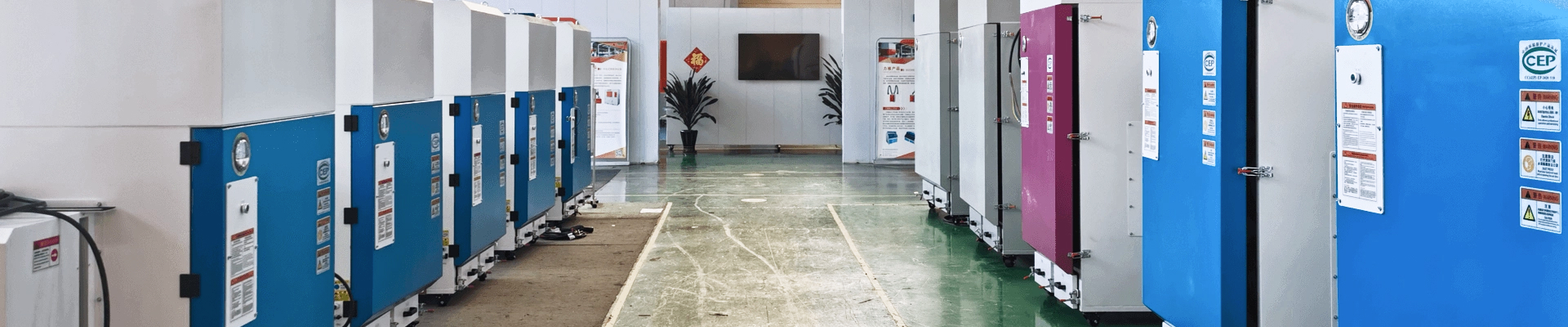
Choosing the right laser dust collection system requires a precise engineering calculation based on your laser bed's physical dimensions, generator power, air duct diameter, and internal table ventilation setup. Designed by DRIC, our heavy-duty laser dust extractors and laser cutter dust collectors provide dedicated high-static pressure suction (4000-9000m³/h), integrated multi-stage spark arrestors, and pulse-jet cartridge self-cleaning systems. Matching your exact machine parameters ensures 99.97% filtration efficiency down to 0.3μm, zero optical lens contamination, and maximum laser cutting uptime.
1. The Core Engineering Parameters: 6 Factors for Laser Dust Extractor Sizing
To ensure your laser cutter dust extractor delivers sufficient suction velocity without wasting power or failing under heavy smoke loads, evaluate these 6 critical machine parameters during technical sourcing:
1. Effective Cutting Bed Area
The physical dimensions of your working table (e.g., 3015/3m*1.5m,4020/4m*2m, or large format exchange table setups) directly dictate the total volume of air and smoke generated during cutting. Larger bed surfaces require higher overall exhaust volume (m³/h) to maintain negative pressure across the enclosure.
2. Laser Power Rating (Wattage)
Higher laser wattage (3 kW, 6 kW, 12kW, up to 30kW+) cuts thicker metal plate at faster speeds, producing denser, higher-temperature sub-micron metallic smoke and heavier spark loads. Higher wattage demands specialized flame-retardant PTFE nanofiber media and enhanced spark arrestors.
3. Bed Exhaust Duct Port Diameter
The physical outlet diameter of your machine's exhaust port determines airflow velocity and static pressure drop. Matching the ducting size prevents dangerous air bottlenecks or excessive static pressure loss over long duct runs.
4. Bed Exhaust Method (Suction-Only vs. Push-Pull / Blow-Suction)
Suction-Only (Direct Exhaust): Relies entirely on the dust collector fan to draw fumes out of the lower bed chambers.
Push-Pull (Blow-Suction): Uses an auxiliary blower to push fumes across the table toward the main suction duct. This configuration optimizes extraction efficiency but alters total airflow calculations.
5. Table Ventilation Valve Style (Open-Type vs. Synchronized / Following-Type)
Open-Type (Constant Open): All internal air dampers across the entire bed length remain open simultaneously. This requires a significantly larger airflow volume (m³/h) to maintain suction across the whole machine.
Synchronized / Following-Type (Zoned Dampers): Internal dampers automatically open only in the specific zone where the cutting gantry is active. This concentrates negative pressure, allowing a high-pressure laser cutter dust collector to achieve superior fume capture.
6. Workshop Electrical Power Specifications
Industrial laser installations vary by global region. You must confirm voltage (220v,380v,415v,480v), line frequency(50Hz or 60Hz)and the availability of dedicated neutral (N) and ground (PE) wires to prevent control board faults and electrical noise interference.
2. Technical Parameter Matrix: DRIC Classical Laser Dust Collector Specifications
Use the official technical specifications below to align your cutting machine airflow demands with DRIC heavy-duty industrial extraction units:
| Specification Parameter | DRIC LW-S-1204-055 | DRIC LW-S-1206-075 | DRIC LW-S-1209-110 |
| Motor Power | 5.5 kW | 7.5kW | 11kW |
| Process Capacity (Airflow) | 4000-5000m³/h | 5500-6500m³/h | 8000-9000m³/h |
| Approximate Dimensions (W*L*H) | 1100*1100*1970 mm | 1100*1100*2620 mm | 1520*1220*2730mm |
| Filter Cartridge Configuration | 4 Horizontal Cartridges | 6 Horizontal Cartridges | 9 Horizontal Cartridges |
| Best Application Match | Medium fiber laser beds (3015/4020), zoned damper tables. | High-power fiber laser beds (4020/6020), heavy smoke cutting. | Large format laser beds (6020+), high-speed multi-gantry or open-type systems. |

3. Step-by-Step Sourcing & Integration Workflow
Follow this 4-step engineering protocol when specifying a new laser dust extractor for your factory floor:
1.Audit Machine Ventilation Architecture
Identify whether your laser bed uses open-type ventilation or gantry-synchronized dampers. Measure the bed dimensions and main exhaust duct port diameter.
2.Select Matching DRIC Unit Capacity
Match your airflow requirement (4000-9000 m³/h) against the DRIC LW-S model lineup (5.5 kW, 7.5 kW, or 11 kW) to ensure adequate static vacuum pressure across the ducting.
3.Verify Electrical Supply & Spark Protection
Confirm your facility's power supply (380V/50Hz, 480/60Hz, 3-phase with neutral/ground). Specify an integrated multi-stage fire net spark arrestor if cutting carbon steel or aluminum.
4.Connect Automated Pulse-Jet Cleaning & Commission
Hook up a 0.4-0.6 MPa clean compressed air supply to the unit. Set differential pressure-based pulse-jet blowing to automatically discharge dust cakes during active cutting shifts.
4. FAQ: Sizing & Technical Sourcing Insights
Q: Why does an open-type ventilation laser table require a larger dust collector like the 11kW model?
A: Open-type ventilation tables leave all air dampers open across the entire bed length simultaneously. This distributes suction power across a vast physical area, requiring a high-capacity collector like the DRIC LW-S-1209-110 (8000-9000m³/h) to maintain strong negative pressure. Synchronized tables open only the damper directly beneath the active head, allowing smaller units like the LW-S-1204-055 (5.5kW) to achieve equal capture performance.
Q: How do electrical power differences (voltage, frequency, neutral/ground) affect the laser dust collector fan?
A: Industrial dust extraction motors and PLC control circuits are sensitive to phase voltage and line frequency. Running a 50Hz motor on a 60Hz power grid without proper VFD adjustment causes the fan to over-speed, overheating the motor coils. Furthermore, lacking a proper neutral or earth ground line can introduce electrical noise that interferes with automatic pulse-jet timer controls and differential pressure sensors.
Q: How does laser wattage influence filter media selection in a laser cutter dust collector?
A: As fiber laser wattage increases beyond 6kW, cutting speeds rise significantly, generating higher particulate density and intense spark showers. Standard paper or polyester filters clog instantly or catch fire. High-wattage laser operations require flame-retardant PTFE membrane nanofiber cartridges combined with mechanical spark-arresting fire nets to safely drop glowing embers before they reach the main filter chamber.
Request Quote
Tell us your inquiry, we will recommend a suitable product model or solution for you!

